Friday, 14 June 2024

Odia Raja - Meaning and Significance | Banaste Dakila Gaja

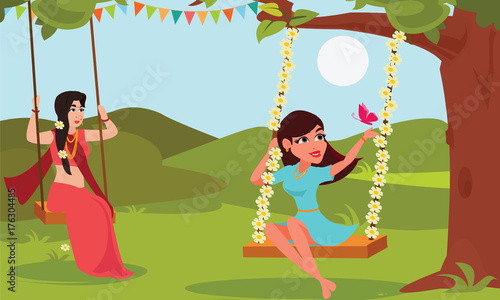
 Young woman playing swings tied on tree branches. Raja Parba or ...


Banaste Dakila Gaja, Barasa Ke Thare Asichi Raja,
Asichi Raja lo Gheni Nua Saja Baja... so the old Odia folksong on Raja goes.

The Raja festival is upon us. We know it and celebrate it as three days of fun, joy, celebrations, new clothes, home cooked pitha, preceded by days of shopping for new clothes and ingredients.

The Raja festival is the day of the year when the earth weeps tears of joy as its dry soil is drenched with the first monsoon rains.  It is during the time of Mithuna Sankranti, which is when the first rains of monsoon strike Odisha. There is also an allusion to the menstrual cycle of young girls of age in the festivities that occur during Raja. While girls have their periods every month, Mother Earth has hers every year.

The festival is a tribute to mother Earth and she is given respite these days and not allowed to carry any burden. The traditional Odia family jobs of "kata", bata", "randha", "badha", "boha bahi" are spared to young girls these few days.

The Odia folk song Banaste Aila Gaja means this is the time when the Elephants meet to mate (maithuna) in the forests, elephants which are revered creatures in Hindu anthology and closely related to the Mother Earth.

On the first day of Raja (Pahali Raja) - young unmarried girls are not supposed to work or touch their feet to the ground. Thus the purpose of the swing so that the feet doesnt touch the groud. Girls deck up in jewellery and finery and enjoy the day on the swing or the cot, while having steamed and burnt delicacies like poda Pitha, and largely food that has not been cokked on hearth.

The day 2 of the Raja is considered to be the main festival. It falls on the day of the Mithun Sankranti. The girl is considered to be the "Rajaki" or like a princess, puts on alta and other finery.

The Day 3 of Raja is the basi Raja, where the young princess is again allowed to mix with everyone and come down from her throne (doli), take down her fineries.

The days are filled with fun and festivities, shopping, games and cooking competitions.

Looking back at the origins of the festival again;

The three days of Raja correspond to the three days of menstruation where women were said to be untouchables for social and hygienic reasons. As per the scriptures the women were Chandala (Untouchable), Brahmaghatini (hurting) and Rajaki on those days. Rajaki also meant a washerwoman, the day the woman cleans her soiled clothes. And the fourth day when finally the woman is considered to be clean or "Suddha" after taking her bath.

All the above are described in the "Rajaswala Dharma"  or "Religious Duties of Menstruating Women" for women in our ancient texts.

I am heartily thankful for the modern day Raja celebrations without their primitive connotations!

Tuesday, 7 May 2024

Masai Mara Safari - Day 3 in the Wilds

Day 3

On our third day at Masai Mara, we woke up  to see two Hippos fighting, out of the water and a baby Hippo amongst them. The Hippos loved the water so much it was difficult to see them out of it. They are called "jalahasti" in Odia (translated to water elephants) for a reason, I guess.  Dik Diks (little deers) roamed around the camp leaving their traces in between and marking their territory! The robins, starlings and the swallows accompanied us as usual at breakfast. The chef Julius at the camp was a genius and provided us with amazingly well prepped meals every time. That required some commitment since we were the only guests at the resort as it was the middle of the week of an extremely lean rainy season.

The rains ensured that the grass was long, which hindered game viewing. Cheetahs were harder to spot this time of the year. The staff wished us luck in spotting the elusive Rhinos and Cheetahs as we started on the third day of the drive. 


The drive took us to the banks of the Mara River. We went to the Mara Crossing, the place lakhs of zebras and wildebeests cross over from Serengeti and then make their journey back in July - September.  The place is infested with crocodiles during the crossing season as they prey upon the wildebeests crossing the river. We spotted a huge crocodile basking on the shore while a team of Hippos lazed around the other bank. The area during crossings must be a sight to behold teeming with wildebeests, crocodiles, zebras, and hippopotamuses.  We had our lunch on the banks, under a tree. 


The second half of the drive was spent trying to spot a Cheetah. Peter followed the tracks, the movement of topis and impalas, the wind direction, trying to hush up a Cheetah. However, the grass was too long for the low-slung stealthy and shy creatures to be spotted. We did get to see the Rhinos, magnificent two-horned ones, at the Nairobi National Park. We managed to catch pictures of the variety of antelopes and gazelles as they pranced about. We came across a large herd of elephants, including a day-old baby, during our Cheetah search. 

Our adventure was not yet over, though! As we returned and were almost near our camp, Peter slowed down as he saw a herd of Topis on extreme alert. Then we spotted the lions far off, coming out of the trees, towards the Topis. The Topis waited as they tracked the lions with the last one on guard. Peter told us that the lions would not be attacking them as they had been spotted. true to his words, the lions moved towards the antelopes and then veered their course. We watched all this from our open vehicle. Then the lions started coming towards us. As we sat frozen, they majestically moved towards us and veered around the jeep and crossed the road to the open field across. Definitely not a sight to be forgotten in a hurry!

Peter our guide seemed totally unconcerned about the lions being so near. Once when a male lion became slightly aggressive when we came across some lions before lunch, Peter eyeballed him and the lion settled down. I am sure of that though my husband was not inclined to believe me! The Masais, the rangers and guides and the wildlife seem to have some understanding, here.


We made our way back to the small airstrip the next morning bidding our goodbyes to the dancing Thomson gazelles (or dumsum gazelles as we heard our guide say), the shy warthogs, the observing giraffes, the elephants, the wise baboons, the sturdy zebras, knowing we would be back again. 

One last trivia. All the zebras’ prints are different like fingerprints on a human. How cool is that!


Mara Wonders - Travel in Masai Mara

We have just returned from a Masai Mara trip. 

We reached Nairobi from Mumbai in the early hours of the morning. From there we went straight to the Wilson airport to catch a Safarilink flight to the depths of the Mara. Safarilink operates many flights to and from Nairobi to various airstrips in the Masai Mara Reserve Forest region. We were taken to the Mushiara airstrip from where the vehicle from our resort and our guide for the next few days were waiting for us. 

The little plane gave us our first glimpse of the vast Masai Mara reserve. There was an incredible vastness with rivers looking like little channels interspersing the landscape, the mountain ranges bordering the huge stretches of savanna, herds of buffaloes, cows, elephants, zebras looking like toys, only the movement revealing them as wild creatures of the area. 


The vehicle waiting for us was the hardy Land Cruiser which we came to realise was exactly suitable for the wild terrain. The open sided vehicle provided the right viewing experience as it went through ruts, muddy banks, grass with ease. Apparently, it had a handy competitor in the Defender from land Rover but we got to see mostly the Toyota vehicle in our forays into the Reserve Forest during "Game Drives" as they were called. Our guide and driver introduced himself proudly as being from the Masai tribe. Not surprisingly, he had a deep knowledge of the landscape and its inhabitants. He shared insights about animal behaviours, tracked movement with other drivers and rangers, and guided us to the best spots for wildlife viewing. At times he reminded us of the "trackers" in the vampire Twilight series! Masai Mara gets its name from the Mara River and the Masai tribe, the custodian of this part of the wilderness. 

On the way back to the resort itself we got to see the our first "game". I guess the term "game" comes from the creatures being games for hunters. Thankfully hunting is banned now. And what a rich cornucopia of untamed wilderness we encountered just on this first journey of the safari! As we crossed the gate of the reserve, we found Zebras drinking water from the spring crossing the road. By the third day of the safari, we were as accustomed as we could be to greet Zebras wherever we looked, in herds, playing, running, grazing. As per our guide about 3 million zebras and wildebeests cross over during migration. 

We came across Pumbas (warthogs, called so, thanks to Disney). They were by far the shyest and smartest creatures we saw, forever wary and looking about for dangers.

We were lucky enough to see giraffes and a herd of elephants really close up on the drive back to the resort. The land cruiser lived up to its expectations as the guide drove us through the shrubs right next to the giraffes and elephants. One must feel the experience to understand it. Right in the forest reserve of East Africa, wild elephants, and giraffes almost within touching distance, grazing, moving around, slightly wary, but not really bothered, from an open all terrain safari vehicle. 

The day's wonders were not yet over. Our camp was right next to the Mara River. We settled down and had tea on the lawns watching Hippos and even a sun-bathing crocodile on the other bank of the river!


In Meryl Streep's word in "Out of Africa". It is a real gift, the forest, a glimpse of the world through God's eyes, as intended...

The day's sightings included the zebras, hippos, elephants, wild buffaloes, giraffes, wildebeests, many of the antelope family like elands, Topis, Thomson's gazelles, Grant's gazelles, impalas, warthogs, dik-diks, and even a lone crocodile amongst others. It took us a couple of days to distinguish the various animals and there were many other small ones pointed out by the guide.


Masai Mara Safari - Day 2


Day 2

Our second day at the Masai Mara was dedicated to a full-day game drive. Starlings, swallows, robins and even a couple of bats gave us company as we took our breakfast overlooking the river. With a packed lunch we were ready to spend the day out in the wilderness. We traversed different terrains, from open plains to riverine forests, looking out for the Mara's diverse wildlife. We were not disappointed. 

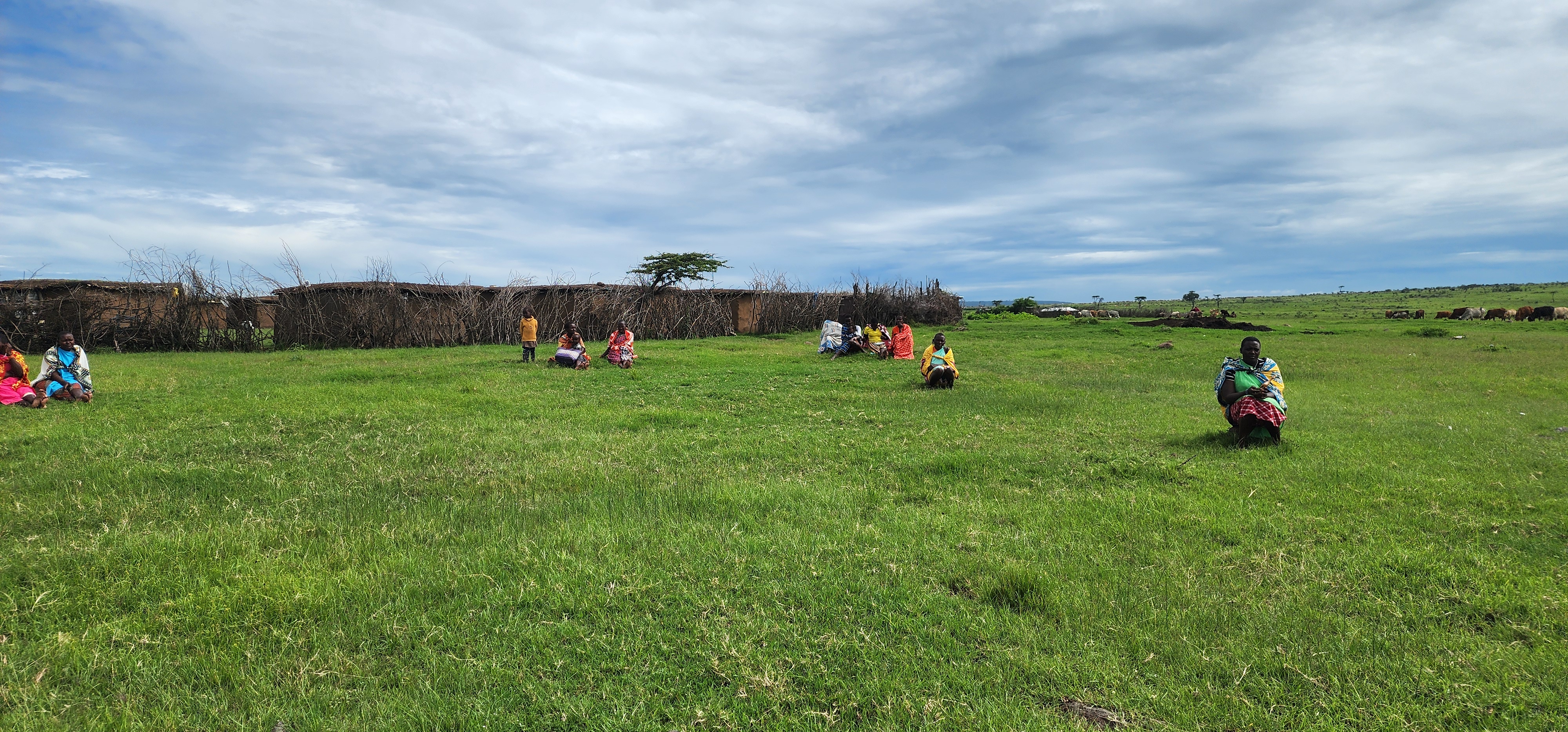
Our first stop was the Masai village. We were treated to songs and dances by the villagers. 

The rhythmic tunes and dancing without the benefit of karaoke or tracks in full throated deep voices told of ancient tales of people at one with nature. They showed us how to make fire from flint, took us around the round of huts. the women of the village had speedily laid out colourful wares made of beads, clay, ivory, wood, leather for us to view or purchase. After the colourful interaction and a bit of shopping we continued with our game drive. 

Next, we encountered the highlights of our trip. The guide led us to a location where lions had recently been spotted. Before us was a pride with their kill, a breathtaking sight. Two lionesses were near the carcass while a third was feeding on it. A fourth lioness bravely kept a pack of hyenas at bay.  

The hyenas would retreat momentarily, only to regroup and come back at the lioness driving them away. Occasionally, another member of the pride would join the fight against the hyenas. The scene included at least six lionesses, around twenty hyenas, and a male lion in the distance, having already eaten his fill. It was both fascinating and awe-inspiring.

Lunch at the Mara

The guide Peter then led us to a lone tree right in the middle of the Savannah and set out a table and cutlery for lunch. We had a Kory Bustard for company, strutting about, a herd of elephants and giraffes on the horizon, ostriches in the distance, spreading their wings, pecking, trotting about and of course swarms of butterflies, sparrows, finches around. 

The desert date tree which provided our canopy dots the landscape. Mara in Swahili also means spots. the date trees scattered around apparently make it look like a spotted land! However, there were not really that many of them in our sojourn into the mara. They were few and far between.

Other than the animals, we kept a look out for birds as much as possible. We are not professional travellers, and as such did not have any cameras or binoculars with us. Peter lent us his binoculars at times. Luggage restrictions meant we didn’t carry ours. I feel binoculars are necessary even if not cameras. There are plenty of beautiful photos available online but one can really watch the habits, pick out birds and animals from a distance through field glasses. I guess there's FOMO at work here!

The long-tailed widow bird travelled with us on our journey. The hopping flying bird kind of reminded me of a kangaroo on wings. We paused at times to watch it hop up and down like on a trampoline. Peter's binoculars came in handy as we picked out a Martial eagle and a white backed vulture on tree tops, both majestic in their sizes.

A pied kingfisher watched us as we crossed a stream. It seemed to be there the next day too in the company of a monitor lizard and a heron! We saw plenty of Egyptian geese, some guinea fowls, native to the place, and beautiful crowned cranes along the way. There were storks on baobab trees while Cork Hearty Beasts grazed underneath. The giraffes meanwhile entwined their long necks to get a view of everything around them. Hamerkops were other birds that swept across the landscape, Ibises, cormorants, ducks, herons, geese and egrets swarmed around water bodies. We spied a lot of beautiful blue Rollers and a few Secretary birds. There were several bishop birds too. Peter was knowledgeable enough to stop, pause and show us the birds as well as tell us the names. Google did the rest in identifying them.

I asked Peter if he felt bored taking out the same trip every day. he said every day was different. I saw what he meant. While we came across more of warthogs, antelopes, gazelles, zebras, topis, giraffes, buffaloes, etc, the landscape changed, the scenes changed and the deeper we went into the reserve the more we were engulfed by its magic. 

We returned to the camp sated but still not having seen two of the big five, the Rhinos and the Cheetahs, both elusive, shy and few in numbers. The evening was spent listening to the gurgling stream of Mara and watching some of the Hippos finally make a move out of the water. We missed the gorgeous Mara sunset as rains and thunderclouds gathered across the sky.